
2026-09-14 ·
Restoring Hardwood Floors After Fire Damage in Payson
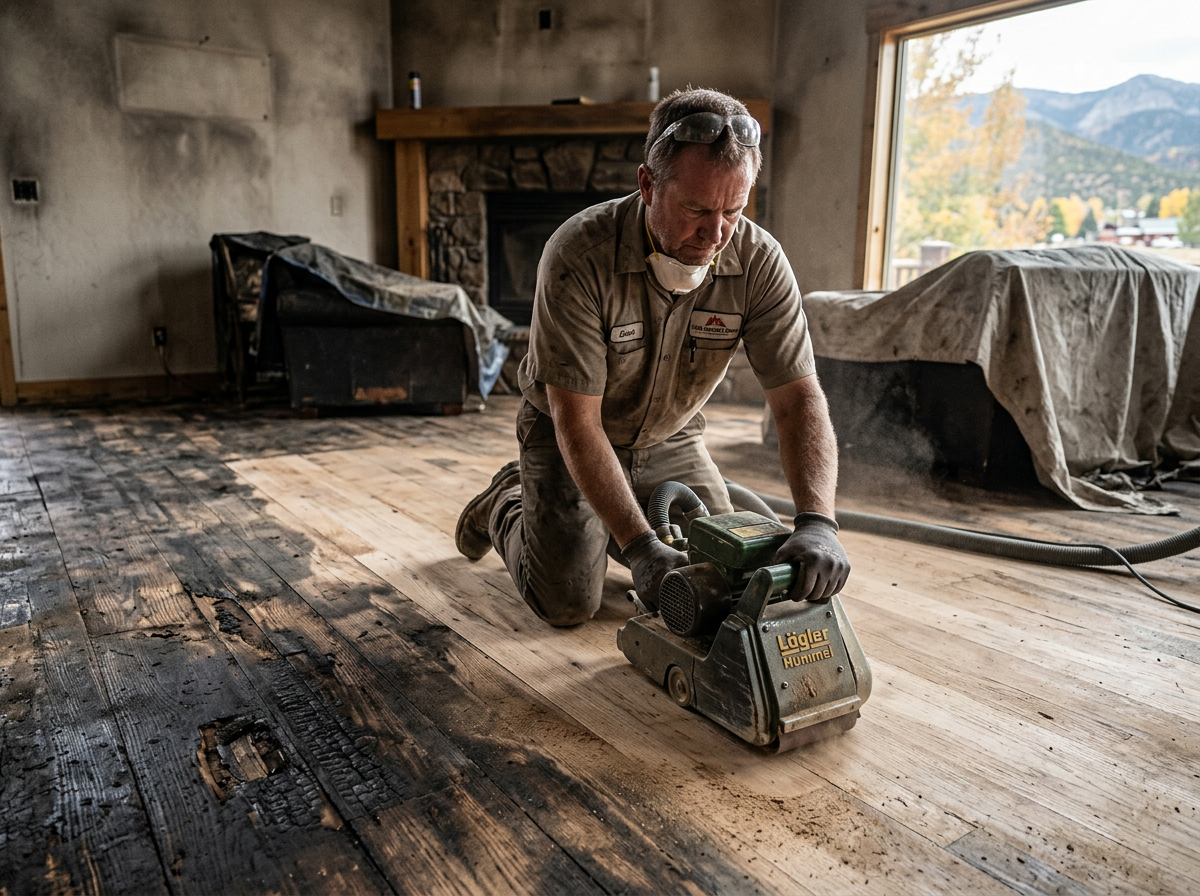
Restoring hardwood floors after fire damage in Payson starts with inspection and soot removal inside the first 24 hours to limit penetration into the wood surface. Dry air in the region allows soot to travel far from the original burn site, while suppression water can freeze at higher elevations and complicate drying. The process focuses on matching cleaning methods to the soot type present before refinishing can begin.
Identifying Soot Types on Hardwood
Protein soot from kitchen fires leaves a thin film that requires neutral cleaners to avoid etching the finish. Dry soot from structural burns sits loosely and responds to vacuuming with HEPA filters before any liquid contact. Wet soot from smoldering materials penetrates deeper and needs emulsifiers to lift it without raising the grain. In Payson homes near the wildland-urban interface, multiple soot types often appear together on the same floor. Matching the product to the residue prevents color transfer into the oak or maple. See our soot and residue cleaning page for method details used on local projects.
Managing Suppression Water Effects
Water used to extinguish fires can pool under hardwood boards and freeze when temperatures drop at Payson elevations. Ice expansion lifts boards and forces moisture into the subfloor. Once thawed, the water must be extracted within 48 hours to keep mold risk low. Technicians place air movers and dehumidifiers in patterns that pull moisture from the edges inward. Monitoring meters track moisture content until readings return to the 10-12 percent range typical for local interiors. This step precedes any sanding because trapped moisture will cause cupping later.
Addressing Odor from Wasatch Inversion
The Wasatch inversion traps smoke particles near the ground through much of the winter and allows odors to linger in porous wood. Hardwood floors act as reservoirs for these compounds if not cleaned before the inversion sets in. Neutralizing agents applied after soot removal break down the odor molecules rather than masking them. Ventilation is limited during inversion events, so crews run negative air machines with carbon filters inside the affected rooms. Floors in homes that escaped direct flame but received smoke from nearby fires often need this extra step. Read more in our article on local wildfire smoke effects on homes in southern Utah County.
Refinishing After Cleaning
Once the surface is free of residue and dry, light sanding removes the top layer that absorbed any remaining discoloration. Multiple coats of finish are applied with drying times adjusted for Payson's low humidity, which speeds evaporation but can cause rapid skinning. Owners can inspect the final surface for uniformity before any furniture is returned. The sequence avoids skipping steps that would leave embedded particles visible under new finish. For rental properties facing similar issues, additional notes appear in our article on fire damage restoration considerations for Payson rental properties.
Ongoing Maintenance in Payson Homes
After restoration, regular vacuuming with soft brushes prevents grit from abrading the new finish. Avoid wet mopping for the first 30 days while the finish cures fully. Annual inspections catch early signs of moisture intrusion from seasonal temperature swings. These habits preserve the work done during the initial recovery. Utah Fire Recovery at 675 S 100 W #3, Payson, UT 84651, handles the full sequence from assessment through final coat.