
2026-09-14 ·
Local Wildfire Smoke Effects on Homes in Southern Utah County
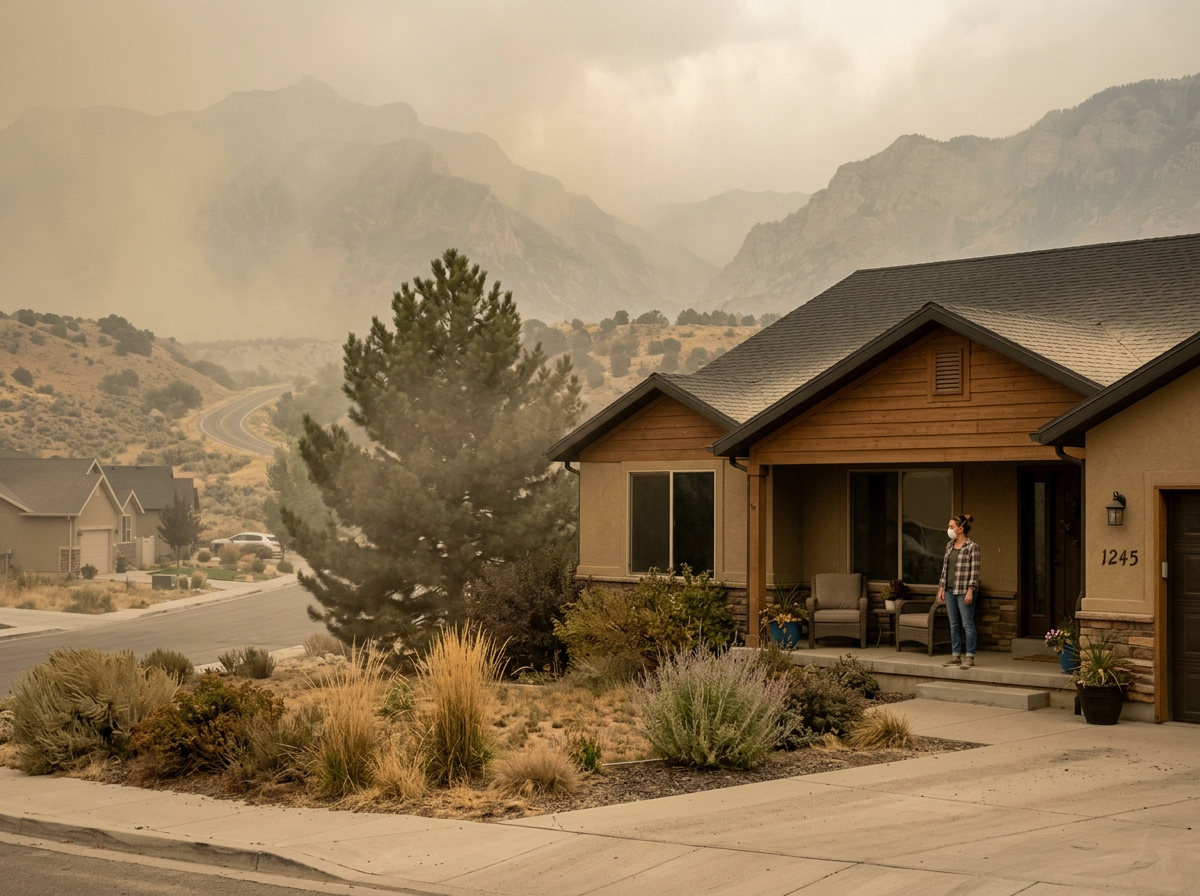
Wildfire smoke from nearby wildland-urban interface fires can deposit residue inside Southern Utah County homes even when the structures themselves remain unburned. Dry air carries fine particles long distances, while Wasatch inversion layers trap odors through winter months. Southern Utah's milder climate without inversion often allows faster dispersion compared to northern valleys.
Smoke Movement from Wildland-Urban Interface Fires
Fires burning at the edge of developed areas send smoke plumes that settle on roofs, siding, and through open vents into attics and living spaces. In Southern Utah County, this occurs when winds carry particles from brush and timber burns into neighborhoods around Payson and nearby towns. The dry regional air keeps soot airborne longer than humid climates, allowing it to infiltrate HVAC systems and settle on fabrics and hard surfaces inside homes. Elevation plays a role because higher sites experience different wind patterns that direct smoke toward lower valleys. Residents notice a persistent film on windows and a lingering smell in closets after such events. Fire Damage Restoration addresses the initial assessment of these deposits. Homes in areas like Salem or Mapleton often see smoke entry through unsealed gaps around doors and utility penetrations.
Different Soot Types and Surface Effects
Protein soot from cooking-related fires or certain vegetation creates a sticky residue that bonds to painted walls and kitchen cabinets. Dry soot appears as a fine powder that spreads easily when disturbed, coating furniture and electronics in living rooms. Wet soot forms when suppression efforts mix with smoke, leaving a thicker film on floors and baseboards that can stain porous materials. Each type reacts differently to cleaning methods, with protein soot often needing solvent-based approaches and dry soot responding to vacuuming followed by washing. In Southern Utah County homes, the combination of these residues appears after interface fires because multiple fuel sources burn at once. Surfaces like wood trim and carpet fibers hold particles longer in low-humidity conditions common to the region. Proper identification prevents further spread during initial cleanup.
Climate Influences on Residue Persistence
Southern Utah County's milder temperatures and lack of inversion allow smoke odors to dissipate more quickly than in northern Wasatch areas where cold air traps particles through winter. At higher elevations near Payson, suppression water can freeze in pipes and attics, complicating drying after smoke events. Typical drying periods for affected materials range from several days to a week depending on airflow and material thickness. Dry air in the region also means soot remains loose on surfaces rather than absorbing moisture that would make it clump. This affects how residue moves through ductwork and onto belongings stored in basements. Homes in Santaquin or Goshen experience these patterns during fire season when winds shift from surrounding foothills. Smoke Damage Restoration focuses on removing these climate-specific deposits without spreading particles further.
Practical Assessment Steps for Homeowners
Begin by inspecting attics and crawl spaces for visible films on insulation and framing, as smoke often enters through roof vents first. Check HVAC filters and replace them immediately to stop circulation of fine particles. Wipe test surfaces with a white cloth to determine soot type based on color and texture before any cleaning begins. Document affected rooms with notes on odor strength in different seasons, since inversion can return smells even after initial airing. Focus on unburned homes by checking for residue on window sills and inside cabinets where airflow deposits particles. What Affects Fire Damage Restoration Timelines in Utah County outlines factors that influence how long these steps take under local conditions. Contact Utah Fire Recovery at 675 S 100 W #3, Payson, UT 84651 for evaluation when multiple rooms show consistent signs.