
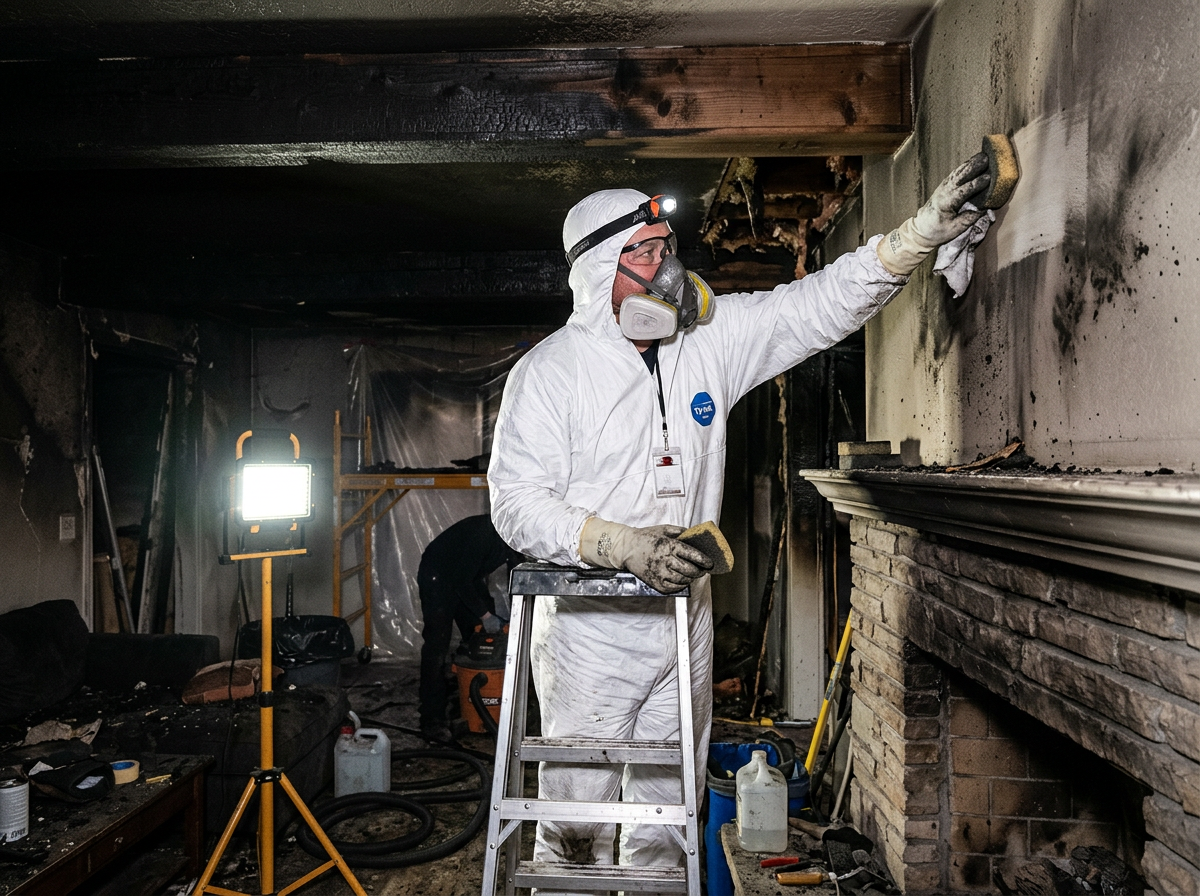
Utah fires leave three distinct soot residues that behave differently on surfaces. Protein soot from kitchens is nearly invisible yet produces a persistent odor that travels through dry winter air into rooms the flames never reached. Dry soot brushes away with proper vacuum filtration while wet smoke from smoldering materials smears and requires solvent cleaning; applying the wrong method first bakes the residue into drywall or wood and forces full replacement. Technicians test small areas at the Payson address before full work begins because the Wasatch inversion traps odor molecules that later reappear once temperatures rise.
Suppression water that freezes in wall cavities above 4,500 feet adds another layer of residue once it thaws and carries soot deeper into cavities. Crews open baseboards and inspect insulation before any wiping starts, then use negative air machines to keep loosened particles from drifting into unaffected rooms. Homeowners often attempt spot cleaning with household products that spread wet soot and create permanent ghosting on ceilings, which is why identification happens before any agitation or liquid contact.
Soot and Residue Cleaning Near You — Choose Your City
Every city below has its own local Soot and Residue Cleaning page with coverage details.
Washington County
Box Elder County
Utah County
Tooele County
Summit County
Cache County
Washington
Iron County
Wasatch County
Davis County
Box Elder
Summit
Weber County
Salt Lake County
Juab County
Morgan County
Cache
Southern Utah jobs lack inversion trapping but face higher winds that drive fine ember soot into HVAC returns and under cabinets. Restoration stops at the point where further cleaning would damage the substrate, and the team documents those limits so the homeowner can decide on refinishing. This approach keeps the work contained to actual residue rather than expanding into unnecessary reconstruction.
Technician insight
In Payson the thing that catches most people out with Soot and Residue Cleaning is the dry winter air that carries fine soot into every cold surface before anyone notices; once a homeowner wipes it with a damp cloth the residue sets permanently and the only fix left is replacement.
Kitchen Protein Soot in Payson Split-Level
A kitchen fire left invisible residue throughout the main floor. Testing showed protein soot on cold exterior walls that had not been touched by flames. Crews isolated the HVAC, vacuumed dry particles first, then solvent-cleaned only the affected drywall. Odor did not return after the inversion lifted.
Soot and Residue Cleaning Services We Offer
✓Protein Residue Cleaning
Removes invisible kitchen soot that reappears as odor after winter inversions settle over Payson valleys.
✓Dry Soot Removal
Vacuums loose, powdery residue from unburned rooms using HEPA filtration before it migrates through ductwork.
✓Wet Smoke and Solvent Cleaning
Applies controlled solvents to smear-prone wet soot on painted surfaces without driving residue deeper into the substrate.
✓Ceiling and Wall Surface Restoration
Tests and treats drywall and wood finishes after soot type is confirmed so ghost marks do not return after drying.
How it works
- 1
Soot Type Identification
Technicians examine residue color, texture and odor on site to select the correct removal method before any surface contact.
- 2
Containment and Air Management
Plastic barriers and negative air machines isolate work zones so particles do not travel into clean rooms during agitation.
- 3
Targeted Residue Removal
Dry vacuuming, solvent wiping or specialized sponges are applied according to the identified soot type on each surface.
- 4
Final Odor and Surface Check
Air sampling and visual inspection confirm residue is gone and no new staining appears after the first drying cycle.
Pricing
Scope varies with the number of affected surfaces, soot type and whether cavities must be opened; call for an inspection-based quote.