
2026-09-14 ·
Fire Damage Restoration Considerations for Payson Rental Properties
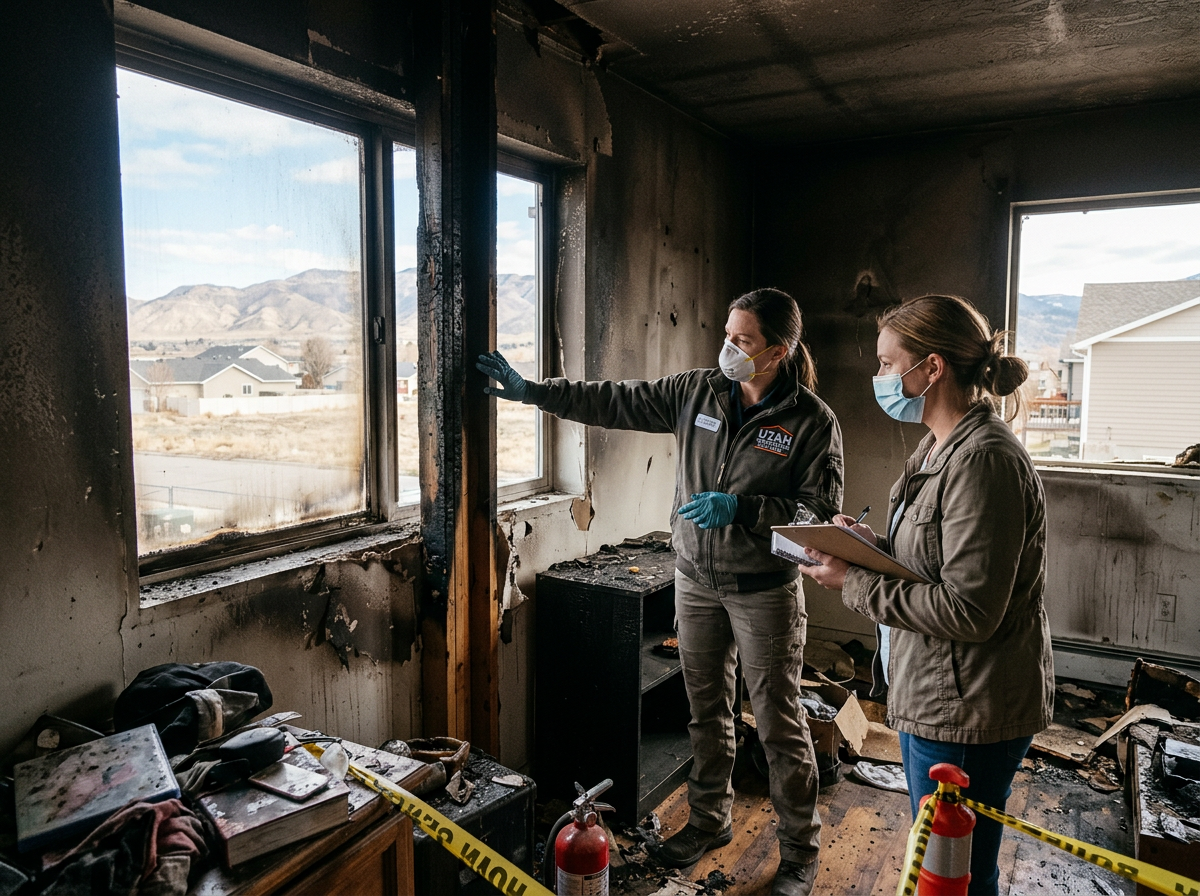
Restoring fire damage in Payson rental properties starts with evaluating how smoke travels through shared walls and HVAC systems in multi-unit buildings while accounting for frozen suppression water at local elevations above 4500 feet. Dry air in the area allows soot to settle on surfaces far from the original burn site, and winter inversions can trap odors for weeks. Owners must coordinate access with tenants and prioritize cleaning methods matched to protein, dry, or wet soot before reoccupancy.
Matching Cleaning Methods to Soot Types in Rental Units
Payson rentals often contain mixed soot after kitchen or electrical fires. Protein soot from cooking requires alkaline solutions to break down greasy films on appliances and cabinets. Dry soot from structural burns responds to vacuuming with HEPA filters followed by mild detergent washes on hard surfaces. Wet soot from smoldering materials needs emulsifiers to lift residues from carpet and upholstery without driving particles deeper into fibers. Technicians test surfaces first to select the correct pH level and avoid discoloration on rental-grade finishes. This targeted approach reduces repeat cleaning visits and keeps units available for new tenants sooner. See detailed processes at /services/soot-and-residue-cleaning.
Managing Frozen Suppression Water at Payson Elevations
Winter fires in Payson frequently involve water that freezes inside wall cavities and attics because nighttime lows drop below 20°F. Ice expansion can crack drywall and insulation, creating hidden moisture pockets that later support mold if not dried within 48 hours of thawing. Restoration teams use moisture meters on multiple floors to locate trapped water, then apply air movers and dehumidifiers calibrated for the dry local climate. Rental owners schedule these steps around tenant schedules to minimize displacement. Prompt drying also prevents claims from adjacent units when water migrates through shared floors. Learn more about related timelines at /blog/what-affects-fire-damage-restoration-timelines-in-utah-county.
Addressing Odor Retention During Wasatch Inversions
The inversion layer that settles over Utah County in winter traps smoke particles and odors inside Payson rentals for extended periods. Closed windows and limited airflow allow residues to re-deposit on fabrics and HVAC filters. Technicians run hydroxyl generators or air scrubbers after initial cleaning to neutralize odors without introducing additional moisture. Owners should request filter replacements and duct inspections before tenants return, especially in units near wildland edges where smoke enters from outside. This step reduces complaints from future renters and supports normal turnover schedules. Additional attic assessment guidance appears at /blog/step-by-step-guide-to-assessing-fire-damage-in-your-payson-attic.
Coordinating Access and Repairs Around Tenants
Payson rental properties require clear communication plans when restoration overlaps with occupied units. Owners arrange daytime work windows and temporary relocation for sensitive tenants while sealing off work zones with plastic barriers. HVAC shutdowns during cleaning prevent soot redistribution to unaffected apartments. Final walkthroughs include documentation of restored surfaces so both parties confirm condition before keys are returned. These logistics keep projects moving without extended vacancy losses.