
Cache Junction properties feature older agricultural construction with open interiors and unheated sections that require careful sequencing during any restoration work. Access follows UT-23 from the south, and crews plan around the coldest months when water management becomes a primary concern.
Seasonal temperature swings in this northern agricultural setting influence drying times and material handling, especially in buildings that remain unheated between uses.
Here's how our mold remediation work runs in Cache Junction — the same standards we hold across Utah, delivered by the crew that covers Cache.
Mold Remediation Services We Offer in Cache Junction
✓Post-Fire Mould Containment
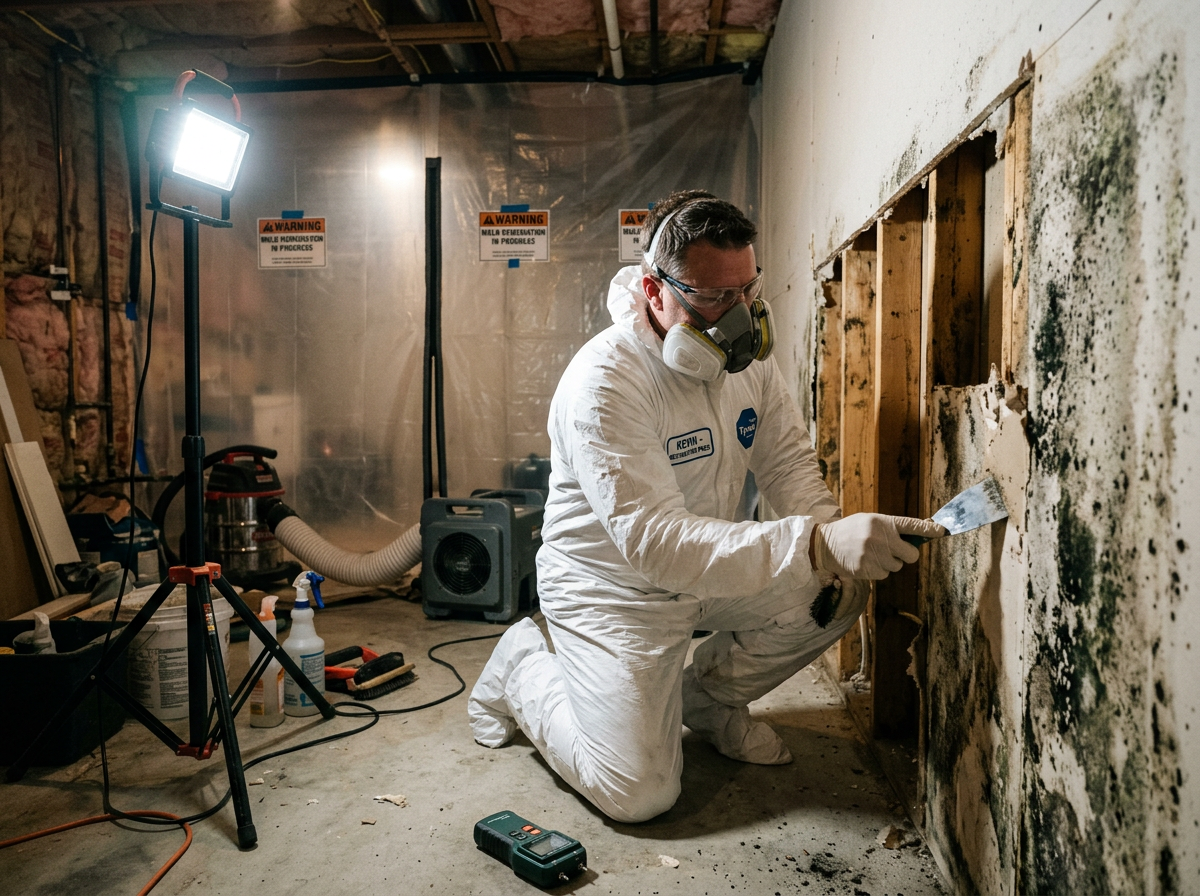
Physical barriers and negative-air setups isolate mold-affected zones created by standing suppression water so spores stay out of living spaces and HVAC systems.
✓Moisture Source Correction
Extraction and drying of water trapped in cavities above 4,500 feet where winter freezing delayed evaporation and allowed mold to establish.
✓Wall Cavity Mold Remediation
Targeted removal of insulation and sheathing behind finished surfaces where meltwater from frozen suppression water has fed hidden colonies.
✓Attic Mold Removal After Suppression
Clearing mold growth in roof spaces common after ember intrusion fires when water from suppression lines pools on ceiling joists and insulation.
✓Post-Remediation Verification
Moisture readings and visual inspection confirming all affected material has been removed and remaining surfaces meet dry standards before reconstruction begins.
Suppression water left standing after winter fires in Payson and higher elevations often freezes inside wall cavities and attics before crews can extract it. When temperatures rise, the thaw feeds hidden colonies that spread through cellulose insulation and behind baseboards without visible surface signs. Dry winter air and tight modern envelopes keep the moisture trapped longer than in milder valleys, turning small leaks into widespread growth that standard fans never reach.
Technicians start by mapping moisture with meters and infrared before any demolition, because cutting into frozen cavities releases water that can re-soak already dried areas. Negative-air machines and physical barriers isolate the work zone so spores do not travel through HVAC returns into rooms the fire never touched. Once the source is opened, affected material is removed to the studs, surfaces are treated, and cavities are dried to documented dry standards rather than visual inspection alone.
How It Works in Cache Junction
- 1
Moisture Mapping
Technicians use meters and thermal imaging to locate hidden water from suppression lines that froze and later thawed inside walls and attics.
- 2
Containment Setup
Sealed barriers and negative air machines are installed to prevent cross-contamination into unaffected rooms and ductwork.
- 3
Material Removal and Cleaning
Wet or moldy drywall, insulation, and trim are cut out; remaining surfaces receive appropriate antimicrobial treatment.
- 4
Drying and Verification
Industrial dehumidifiers and air movers bring cavities to documented dry levels, followed by final moisture checks.
Serving All of Cache Junction
We regularly handle mold remediation jobs near:
- 📍UT-23 corridor
- 📍Cache Junction farmlands
- 📍local agricultural properties near Logan
Mold Remediation Pricing in Cache Junction
Scope is determined by hidden moisture extent, number of affected cavities, and square footage requiring removal after inspection. Call for a site assessment.
Want the full picture of this service? See our Mold Remediation page, or everything we do in Cache Junction, UT.