
2026-09-14 ·
Recognizing Hidden Smoke Damage in Payson Ductwork
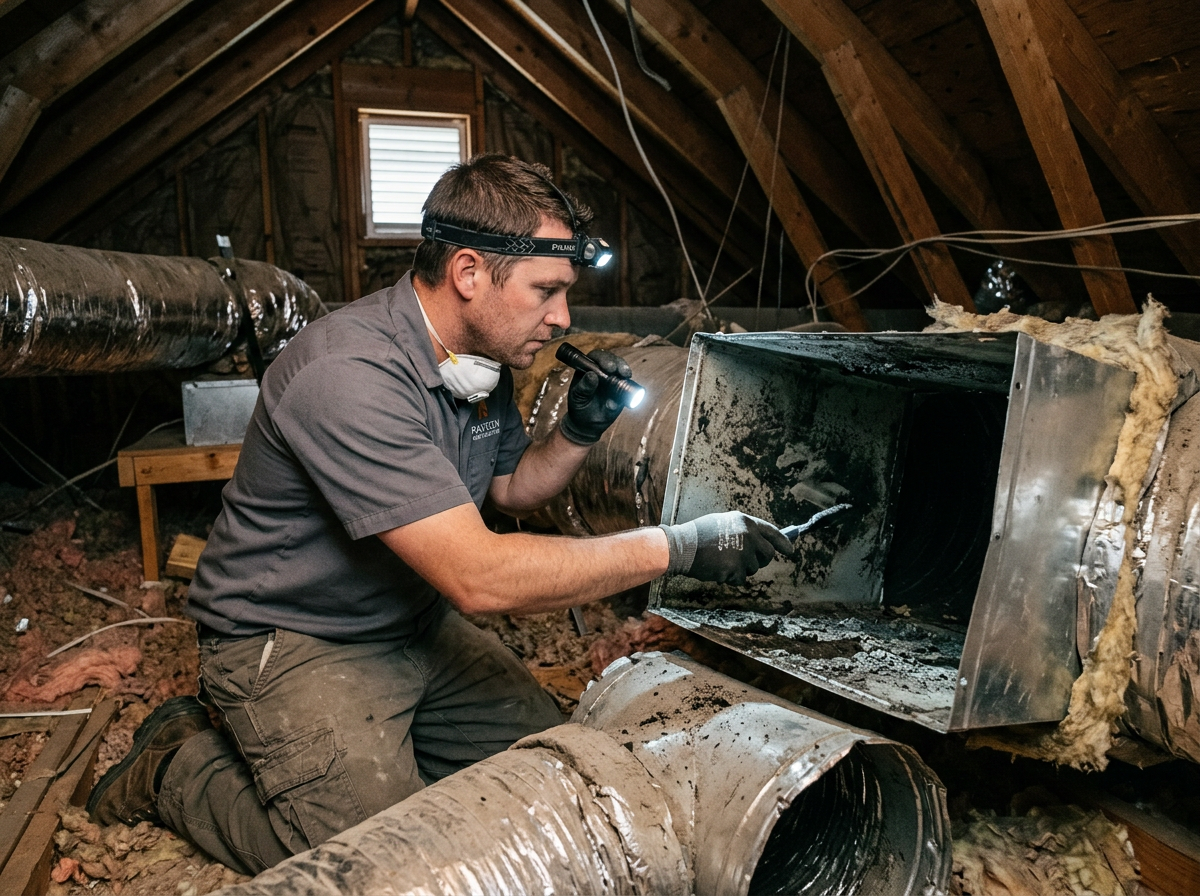
Smoke from wildland-urban interface fires around Payson often enters homes through HVAC returns without any flames reaching the structure. Dry air carries fine soot particles long distances, and the Wasatch inversion traps odors that then circulate through duct runs. Homeowners notice persistent smells from vents or dark residue near registers weeks after a fire miles away.
How Smoke Travels Through Payson Ductwork
Payson sits at roughly 4,600 feet where low humidity lets soot remain airborne longer than in coastal regions. When a fire occurs in surrounding foothills, negative pressure in a home's return ducts pulls particles inside even if windows stay closed. These particles then move through supply lines and lodge in elbows, joints, and insulation layers that standard visual checks miss. Protein-based soot from kitchen fires bonds differently than dry soot from vegetation burns, requiring separate inspection angles along the full duct path. Southern Utah's milder conditions reduce this risk, but Payson homes near the east bench face higher exposure from wind-driven events.
Common Signs of Hidden Soot in Ducts
A faint smoky odor that strengthens when the furnace runs points to residue inside the duct walls rather than surface dust. Dark streaks around vent covers or on ceiling areas near returns often trace back to particles that escaped filtration. Homeowners may also see fine gray film on furniture that reappears quickly after cleaning, indicating ongoing circulation from the system. Checking the blower compartment for oily films or powdery buildup provides another clue, especially after fires in nearby areas like Mapleton or Salem. These indicators appear because Utah's dry air prevents soot from settling quickly outside the ducts.
Role of Local Climate in Duct Contamination
Winter inversions over the Wasatch Front hold smoke close to the ground and push it into homes through any air intake. Suppression water used on fires at higher elevations can freeze in ducts during cold snaps, leaving behind concentrated residues once it thaws. Dry summer air from the south allows soot to travel farther before depositing, affecting homes that never saw direct flames. These patterns differ from coastal climates where moisture weighs particles down faster. Regular filter changes help, yet fine particles bypass standard filters and collect in longer horizontal runs common in Payson ranch-style homes.
Practical Inspection Steps for Homeowners
Turn off the system and remove a few vent covers to look for discoloration along the first few feet of duct interior. Shine a flashlight into the return plenum and note any powdery or oily deposits that differ from ordinary dust. Run the fan briefly with a clean white cloth held near a supply vent to check for transferred residue. For thorough evaluation, contact specialists in smoke damage restoration who use inspection cameras suited to Utah duct layouts. Pair this with soot and residue cleaning services when buildup appears beyond the first elbows. Review the step-by-step guide to assessing fire damage in your Payson attic for related checks on connected spaces. Early identification prevents odors from embedding further into insulation and duct lining during the next heating cycle.