
2026-09-14 ·
Cost Factors for Smoke Damage Cleanup in Payson Utah
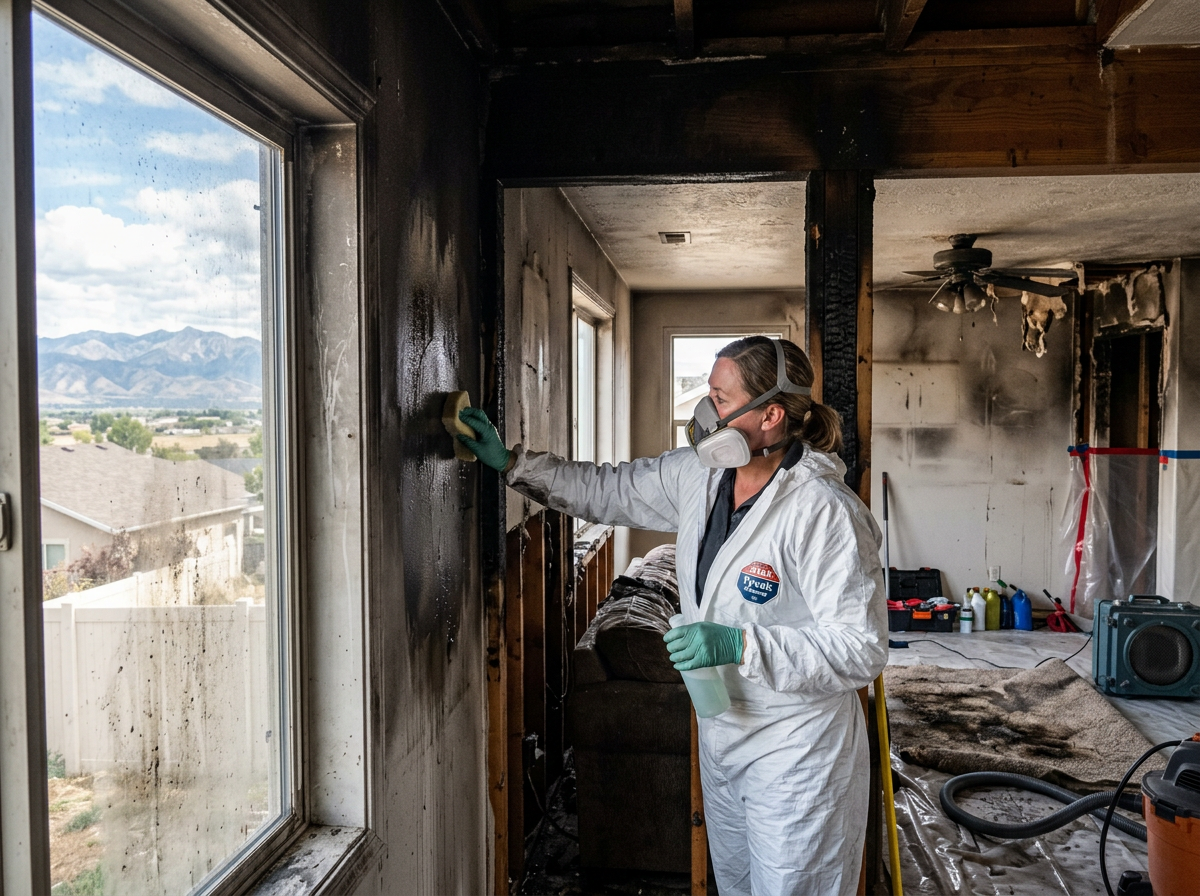
Several variables determine the scope and expense of smoke damage cleanup in Payson Utah. The type of soot present, how far it has traveled through dry air, and whether suppression water has frozen at higher elevations all change the steps restorers must take. Property owners in the area often see smoke travel farther than expected because of the dry climate and the Wasatch inversion that traps odors through winter months. Wildland-urban interface fires can also leave residue in homes that never burned directly.
Soot Types and Required Cleaning Approaches
Protein soot from kitchens, dry soot from wood or paper, and wet soot from plastics each demand distinct removal techniques. Protein residues often require enzyme-based cleaners that work on organic films, while dry soot can be vacuumed with HEPA equipment before surface treatment. Wet soot tends to smear and requires emulsifiers followed by repeated rinsing. In Payson homes the choice of method directly affects labor hours and equipment needs. Restorers must test surfaces first because mismatched products can set residues permanently. Soot and residue cleaning addresses these differences through targeted protocols that match the residue found on site.
Wasatch Inversion and Odor Retention
The Wasatch inversion frequently holds smoke particles close to the ground during winter, allowing odors to penetrate deeper into porous materials such as insulation and drywall. In Payson this can extend the time needed to locate and treat hidden deposits. Dry air common at Utah elevations also lets fine soot travel through HVAC systems and settle in rooms far from the original source. Technicians therefore inspect ductwork and attic spaces even when visible damage appears limited to one area. Proper ventilation and air scrubbing become essential steps that add to the overall project duration.
Suppression Water and Freezing Conditions
Water used to extinguish fires can freeze in unheated spaces at Payson’s elevation, leaving behind ice that later melts and creates secondary moisture problems. This sequence often leads to warped flooring or swollen door frames that must be addressed before final cleaning. Dealing with water used in firefighting in Payson homes outlines the drying and monitoring steps that follow suppression. When water and soot combine, restorers must first extract moisture, then remove residues without spreading particles into newly dried areas. Typical drying periods range from several days to a week depending on airflow and temperature control.
Smoke Travel in the Wildland-Urban Interface
Fires that start in surrounding wildland areas can push smoke into Payson neighborhoods where homes remain structurally untouched. Residues settle on exterior siding, enter through vents, and coat interior surfaces. Because the particles are lightweight they reach upper floors and crawl spaces alike. Cleanup plans must therefore include both interior and exterior surfaces plus attic insulation that may require removal. Smoke damage restoration teams evaluate these spread patterns before beginning work so that every affected zone receives proper treatment.