
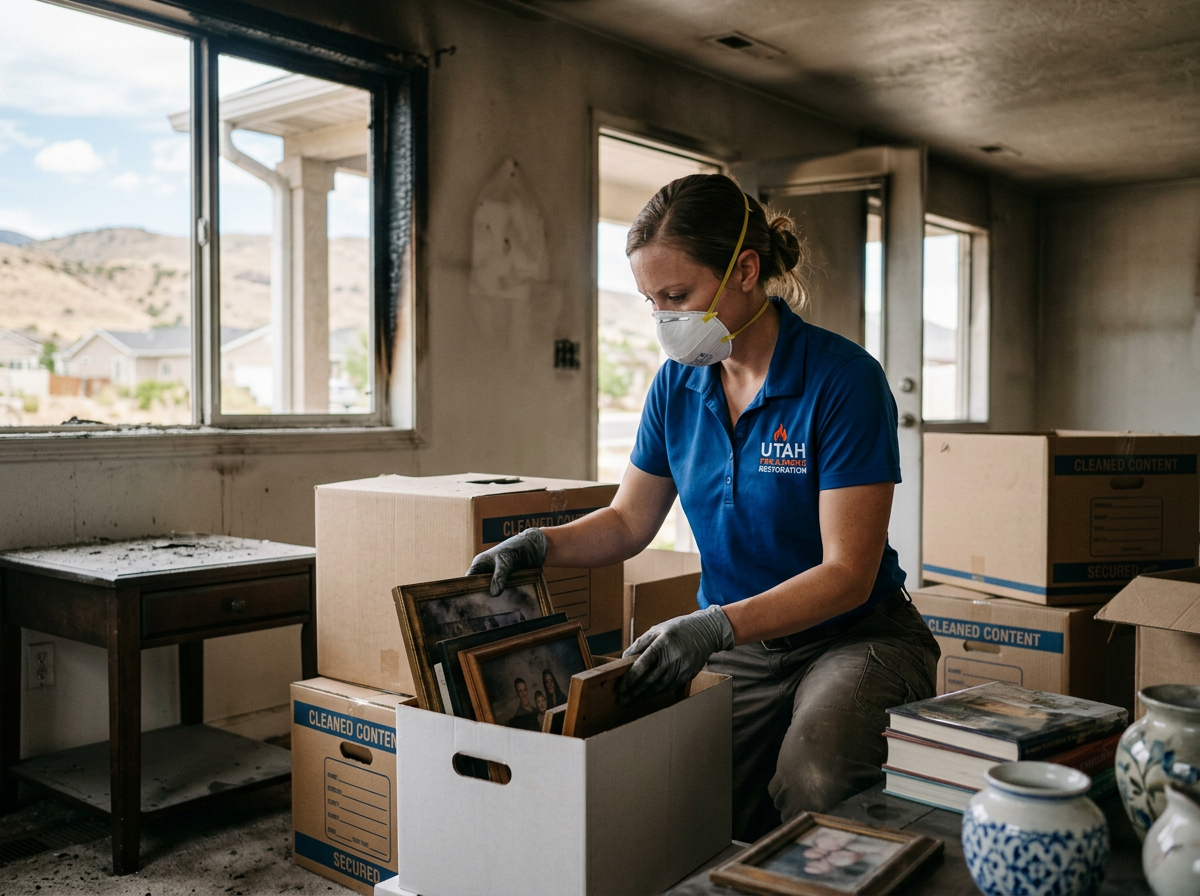
Veyo sits in Washington County on UT-18, a small community of about 470 residents surrounded by lava fields and hot springs. Desert conditions bring hot summers and mild winters, with homes built in stucco and tile that respond differently to smoke than northern brick construction.
Wildland fires in juniper and sage can push smoke into structures quickly along the UT-18 corridor. Utah Fire Recovery crews travel from the Payson base at 675 S 100 W #3 to reach Veyo and nearby Santa Clara and St. George for assessment and restoration.
Local properties often sit on larger lots with open exposure, so early containment of smoke migration through tile roofs and stucco exteriors is a priority before odors settle into interior spaces.
Fire Damage Restoration Services in Veyo, UT
Fire Damage Restoration in Veyo
Utah Fire Recovery restores homes after fire and smoke events by first managing suppression water and securing the struc…
Details →Smoke Damage Restoration in Veyo
Targeted smoke damage restoration across Utah that traces soot paths through HVAC systems and unburned rooms while addre…
Details →Water Damage Restoration in Veyo
Suppression water from Utah fires soaks cavities and freezes fast above 4,500 feet, requiring targeted extraction before…
Details →Soot and Residue Cleaning in Veyo
Targeted soot and residue removal that identifies soot type first so stains lift instead of setting permanently.…
Details →Mold Remediation in Veyo
Targeted mold removal following delayed drying of fire-suppression water in Utah structures.…
Details →Around Veyo
We regularly work near:
- 📍Veyo Hot Springs
- 📍Lava fields bordering the community
- 📍UT-18 corridor through town
- 📍Washington County desert approaches
Fire Damage Restoration in Veyo — Local Notes
- •Stucco and tile construction common in red-rock desert settings allows smoke to travel through roof vents and wall gaps more readily than sealed northern builds.
- •Juniper and sage fuels produce persistent smoke that lingers in mild winter air without the inversion layers found farther north.
- •Access from Payson follows UT-18, requiring crews to plan for longer response runs across open desert terrain before securing affected structures.
- •Hot summer temperatures accelerate drying needs after water use during suppression on local properties.