
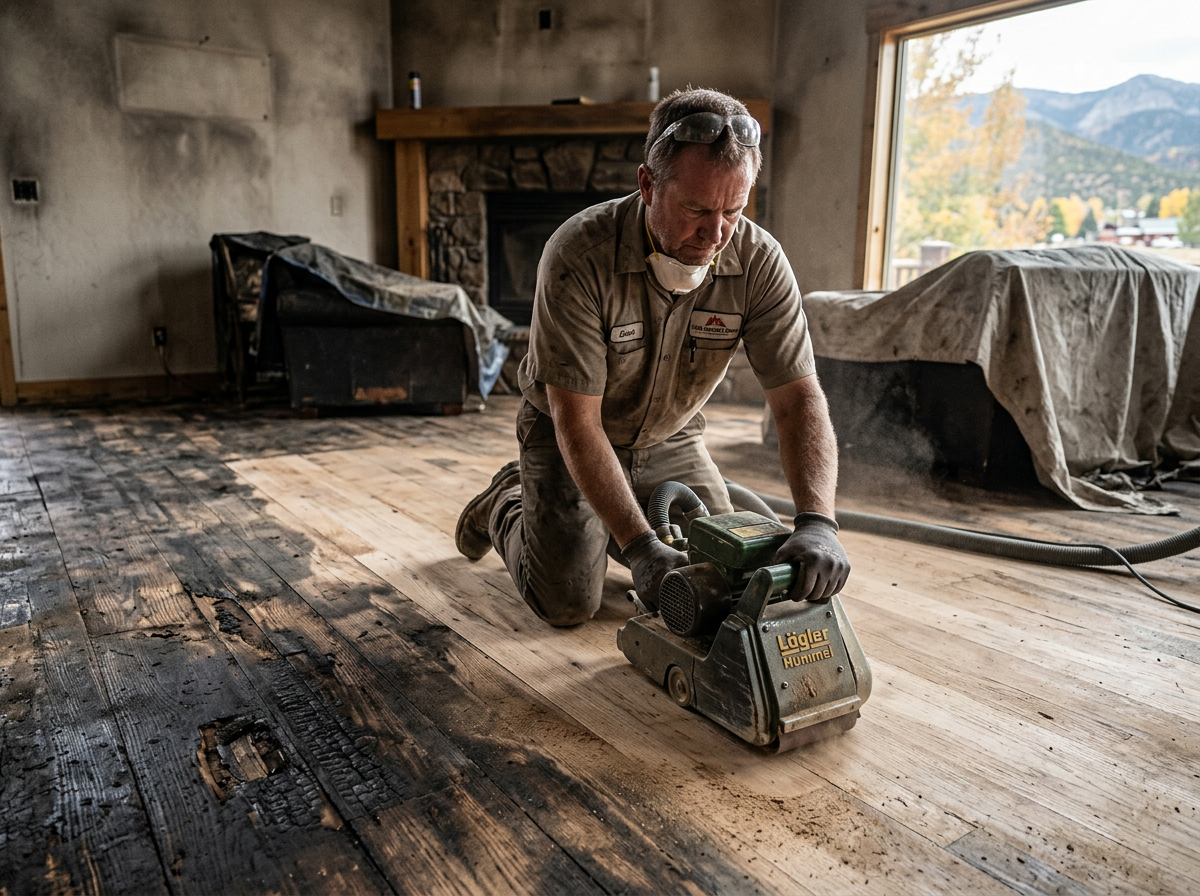
Stockton sits in Tooele County on UT-36 west of Salt Lake City as a historic mining town with older homes and outbuildings exposed to very dry air and wide temperature swings. Hot summers and cold winters increase the chance that embers or electrical faults turn into structure fires, while smoke moves quickly through single-story mining-era layouts.
Utah Fire Recovery crews based at 675 S 100 W #3 in Payson reach Stockton via I-15 north then UT-36 west. Remote properties on long approaches make securing the building the first priority before full smoke and soot removal begins.
Arid conditions here mean ash and smoke residue dry fast and embed in porous materials common in older stock, requiring targeted cleaning that accounts for both summer heat and winter freeze-thaw cycles.
Fire Damage Restoration Services in Stockton, UT
Fire Damage Restoration in Stockton
Utah Fire Recovery restores homes after fire and smoke events by first managing suppression water and securing the struc…
Details →Smoke Damage Restoration in Stockton
Targeted smoke damage restoration across Utah that traces soot paths through HVAC systems and unburned rooms while addre…
Details →Water Damage Restoration in Stockton
Suppression water from Utah fires soaks cavities and freezes fast above 4,500 feet, requiring targeted extraction before…
Details →Soot and Residue Cleaning in Stockton
Targeted soot and residue removal that identifies soot type first so stains lift instead of setting permanently.…
Details →Mold Remediation in Stockton
Targeted mold removal following delayed drying of fire-suppression water in Utah structures.…
Details →Around Stockton
We regularly work near:
- 📍UT-36 corridor
- 📍historic mining town core
- 📍Stockton Town Hall vicinity
- 📍old mine tailings sites west of town
Fire Damage Restoration in Stockton — Local Notes
- •Remote locations on long gravel approaches mean initial response focuses on boarding and weatherproofing before interior work.
- •Very dry air accelerates smoke penetration into wood framing and older plaster typical of mining-town construction.
- •Winter lows can freeze standing water used in suppression, adding hidden moisture problems behind walls along UT-36 properties.
- •Historic structures often lack modern fire stops, allowing smoke to travel through connected attics and crawl spaces.