
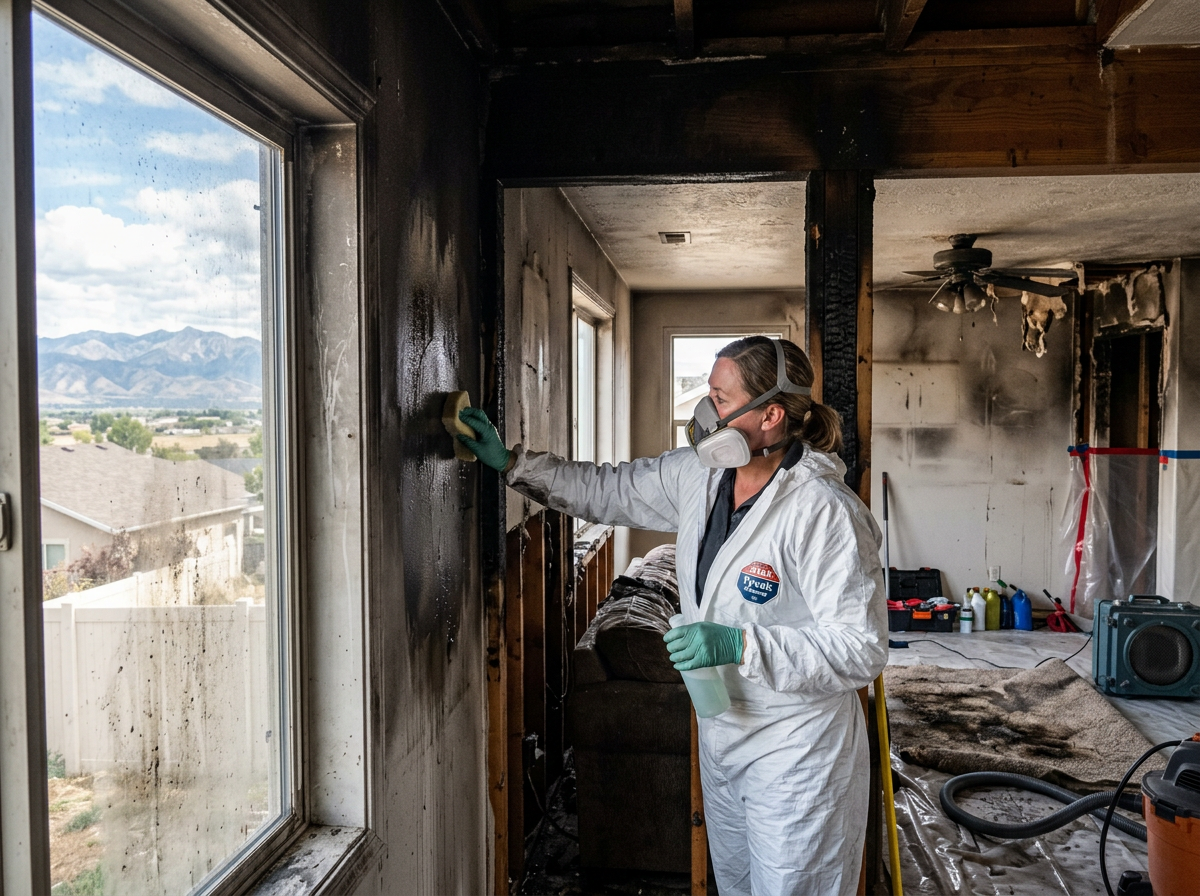
Lewiston sits in northern Utah's Cache Valley along US-91 as a small agricultural community of older farmhouses and outbuildings. Winter temperatures drop sharply and suppression water can freeze inside unheated structures before crews finish drying.
Smoke from structure fires travels through open barn-style interiors and settles into wood framing common in Cache County farm properties. Restoration work here focuses on reaching every wall cavity before cold locks residual moisture in place.
Teams based at 675 S 100 W #3 in Payson travel north on I-15 and US-91 to reach Lewiston, bringing equipment sized for remote agricultural sites rather than dense subdivisions.
Fire Damage Restoration Services in Lewiston, UT
Fire Damage Restoration in Lewiston
Utah Fire Recovery restores homes after fire and smoke events by first managing suppression water and securing the struc…
Details →Smoke Damage Restoration in Lewiston
Targeted smoke damage restoration across Utah that traces soot paths through HVAC systems and unburned rooms while addre…
Details →Water Damage Restoration in Lewiston
Suppression water from Utah fires soaks cavities and freezes fast above 4,500 feet, requiring targeted extraction before…
Details →Soot and Residue Cleaning in Lewiston
Targeted soot and residue removal that identifies soot type first so stains lift instead of setting permanently.…
Details →Mold Remediation in Lewiston
Targeted mold removal following delayed drying of fire-suppression water in Utah structures.…
Details →Around Lewiston
We regularly work near:
- 📍US-91 corridor
- 📍Cache Valley farmlands
- 📍Lewiston agricultural parcels
- 📍Cache County northern fields
Fire Damage Restoration in Lewiston — Local Notes
- •Older farmhouses and detached agricultural buildings dominate the housing stock, with many unheated spaces where water from suppression lines freezes quickly.
- •US-91 provides the main access route, and crews stage equipment along this corridor to reach properties set back from the road on large parcels.
- •Cold semi-arid winters mean any remaining moisture after initial response can expand in framing once temperatures fall below freezing.
- •Smoke migrates through connected sheds and barns, requiring inspection of multiple outbuildings on the same parcel.