
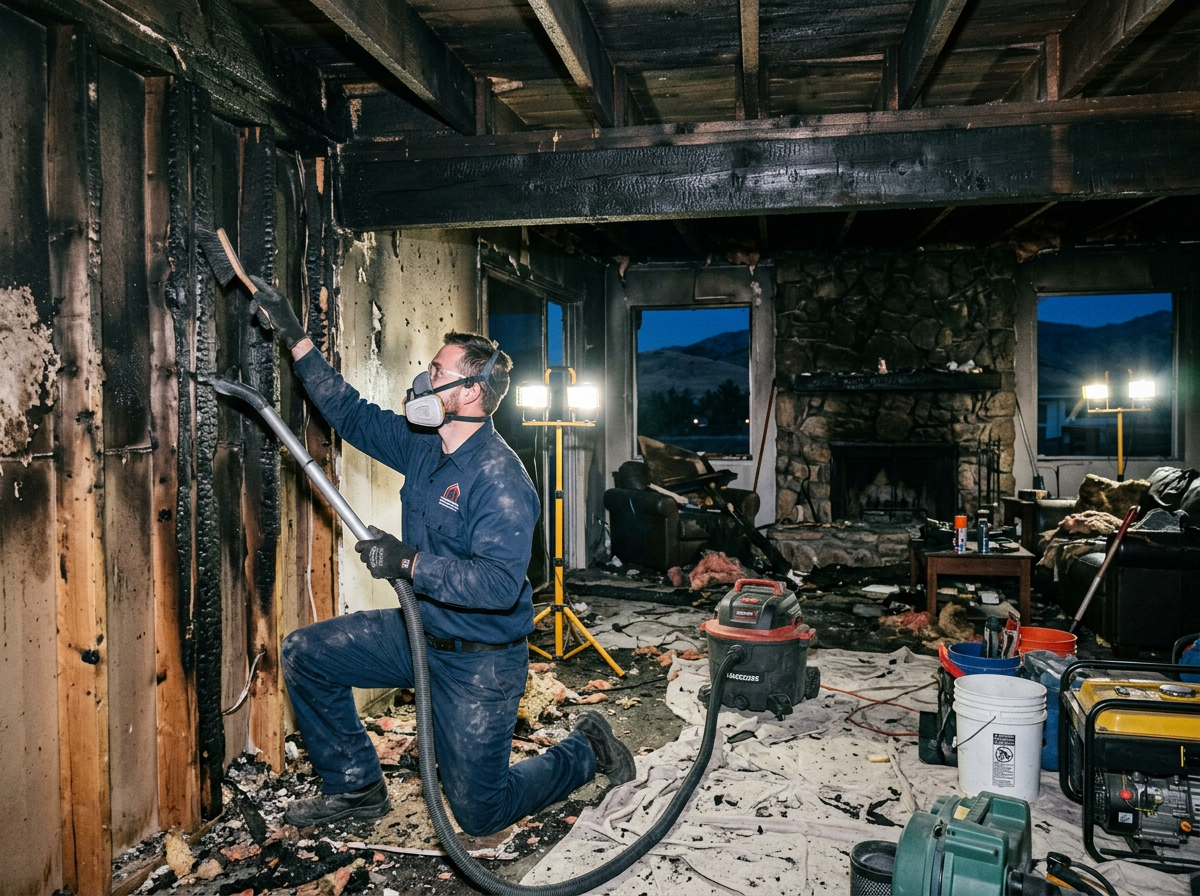
Echo sits in Summit County at high elevation in a semi-arid high desert setting that brings cold winters and limited precipitation. Its small population and status as a historic railroad stop mean properties often include older timber-frame or log construction that can allow smoke to move through walls and ceilings when a fire occurs.
Crews based at 675 S 100 W #3 in Payson reach Echo via main northern routes, typically arriving to address both the initial fire damage and the secondary issue of freezing suppression water that can affect structures left unattended between visits.
Local conditions such as deep cold and empty second homes increase the chance that damage goes unnoticed until crews inspect the site.
Fire Damage Restoration Services in Echo, UT
Fire Damage Restoration in Echo
Utah Fire Recovery restores homes after fire and smoke events by first managing suppression water and securing the struc…
Details →Smoke Damage Restoration in Echo
Targeted smoke damage restoration across Utah that traces soot paths through HVAC systems and unburned rooms while addre…
Details →Water Damage Restoration in Echo
Suppression water from Utah fires soaks cavities and freezes fast above 4,500 feet, requiring targeted extraction before…
Details →Soot and Residue Cleaning in Echo
Targeted soot and residue removal that identifies soot type first so stains lift instead of setting permanently.…
Details →Mold Remediation in Echo
Targeted mold removal following delayed drying of fire-suppression water in Utah structures.…
Details →Around Echo
We regularly work near:
- 📍Historic railroad stop
- 📍Echo Canyon area
- 📍Summit County northern routes
Fire Damage Restoration in Echo — Local Notes
- •Timber-frame and log homes common in the area allow smoke to travel through gaps in older construction during winter incidents.
- •High elevation and cold temperatures cause suppression water to freeze quickly inside unheated structures after a fire response.
- •Remote location means response focuses first on securing the building before full smoke damage restoration begins.
- •Low precipitation and dry air can leave residual smoke odors that require targeted cleaning in unoccupied properties.